The return statement is how a Java method says stop here. When the JVM reaches a return it discards the rest of the method body, hands control back to whoever called the method, and optionally passes a value across as the result. Nothing after the return in that method runs, not even a finally block written for cleanup. There are two forms and the difference between them is a compile-time contract. A void method may use a bare return; with nothing after it, purely to exit early. A method with a declared type such as int or String must return a value of a compatible type, and the compiler enforces that every path through the method reaches a return or throws. Forget one on a single branch and the code will not compile at all, which is one of the nicer safety properties in the language. The behaviour that surprises people is the interaction with try and finally. If a finally block contains its own return, it overrides the return already pending from the try block, and any in-flight exception is silently discarded. The code compiles, it runs, and the value you expected to come back never arrives. It is the single most dangerous misuse of return, which is why the advice is simply never to write one in a finally block.
Detailed Explanation & Mechanics
1) The Two Forms
A void method returns nothing, so it may exit early with a bare return;. A method with a return type must hand back a value.
// FORM ONE: a void method, bare return is allowed
public static void logHeader(String name) {
    if (name == null) {
        return;
        // exit early, send nothing back
    } System.out.println("User: " + name);
    System.out.println("Session started");
}// FORM TWO: a typed method must produce a value
public static int clamp(int value, int low, int high) {
    if (value < low) {
        return low;
        // sends a value back, then exits
    } if (value > high) {
        return high;
    } return value;
    // the normal path
}
Notice how the second method is written. Each branch answers the question and returns immediately, so there is no nesting and no need for a single result variable that gets assigned in several places before a final return.
2) Return Ends the Method Immediately
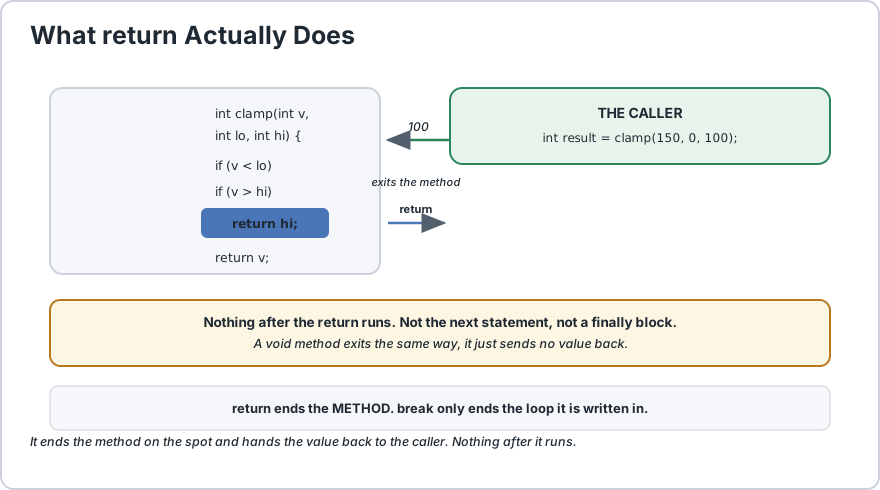
Only the method that contains the return is affected. In a loop, a return leaves the method entirely, so a break inside the same loop never runs. This is the difference from break, which leaves the loop and comes back to the statement after it.
public static String classify(int number) {
    final int SMALL = 10;
    for (int i = 0;
    i <= SMALL;
    i++) {
        if (i == number) {
            return "matched at " + i;
            // leaves the whole method
        }
    } return "no match";
    // only reached if nothing matched
}
A return exits the method on the spot. Nothing below it runs, and the caller resumes with the value.
That behaviour is what makes early return safe and readable. Each condition can return the moment it has an answer, which keeps nesting flat and removes the need for a pile of flags or a result variable declared at the top.
3) The Rule the Compiler Enforces
For a method with a return type, the compiler requires that every possible path ends with a return statement or a throw. This is checked at compile time, not at run time, so you will never ship a method that quietly falls off the end and returns a default value.
public static int score(int hits) {
    final int MIN_HITS = 1;
    if (hits >= MIN_HITS) {
        return hits * MIN_HITS;
        // one path returns here
    } // MISSING: this path reaches the end with no value
} // compile error, and that is the point
Situation
Is it legal?
Every path returns a value
Yes, and the safest shape to aim for
One path returns, another falls off the end
No, compile error
One path returns, another throws
Yes, throw satisfies the rule
Last statement is a while (true) loop
Yes, the compiler can prove it never ends
Every path ends in System.exit()
No, add a return anyway for clarity
Because the check is exhaustive, a typed method is guaranteed to give you a value or an exception, never a silent null or a default zero. That guarantee is the reason a lot of Java code returns a value rather than setting a field for the caller to read back.
4) void Methods and the Bare Return
A void method may use return; to leave early, which is useful for guard clauses. It must never carry a value, since there is nowhere to send it.
public static void send(String address, String body) {
    final int MAX_LENGTH = 1000;
    if (address == null || address.isEmpty()) {
        return;
        // nothing to send
    } if (body == null || body.isEmpty()) {
        return;
    } if (body.length() > MAX_LENGTH) {
        return;
    } System.out.println("sending to " + address);
}
Here a bare return; works as an early exit that mirrors a guard clause, and it beats wrapping the real work in a large if. In a void method the compiler will not force you to end with a return, because there is no value to produce.
5) Return With finally and the Dangerous Override
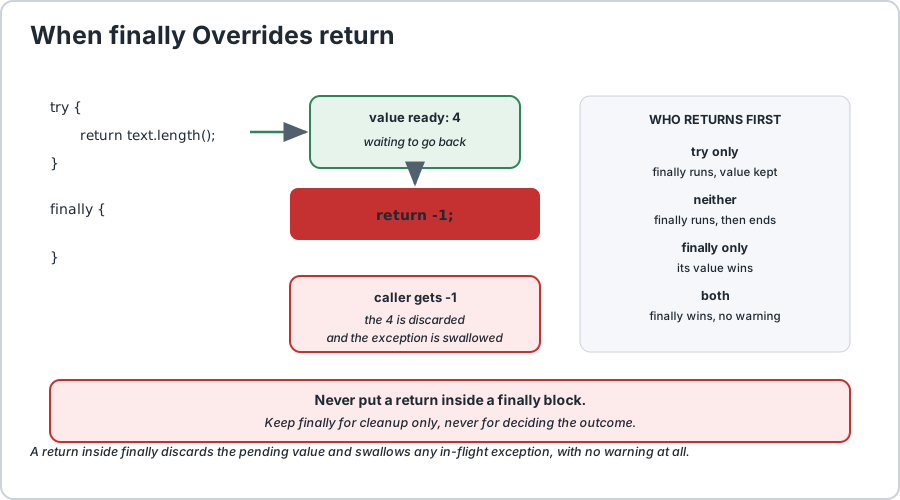
This is the part worth knowing properly, because the compiler will not warn you.
Where the return is
What actually happens
try only
finally runs, then the value from try is returned. This is safe.
Neither block
finally runs, then the method ends normally. Safe.
try throws, no return in finally
finally runs, then the exception propagates. Safe.
finally only
The value from finally is returned. Any pending exception is discarded.
Both blocks
The finally value wins and the try value is thrown away silently.
// BROKEN: the exception vanishes and 0 comes back instead
public static int readLength(String text) {
    try {
        return text.length();
    } catch (NullPointerException problem) {
        return ZERO;
        // intended as a fallback
    } finally {
        return -1;
        // overrides BOTH of the returns above
    }
}// CORRECT: no return inside finally
public static int readLengthFixed(String text) {
    try {
        return text.length();
    } catch (NullPointerException problem) {
        return ZERO;
    } finally {
        System.out.println("finished");
        // cleanup only
    }
}
A return inside finally wins over everything else, and nothing warns you.
Never put a return statement inside a finally block. It silently discards the value your try block computed and can swallow a real exception, turning a visible failure into a wrong answer. Keep finally for cleanup only.
The rule of thumb that keeps this safe: a finally block should contain logging, closing, or undoing state changes, and nothing that decides the outcome.
6) Return From a Loop, From a Switch, From try
Because return leaves the method, a single statement is often enough where you would otherwise need a break and a return afterwards. Here the old-style switch, which is what a beginner is most likely to meet first.
public static int describe(String kind) {
    switch (kind) {
        case "A": return 1;
        case "B": return 2;
        default: return ZERO;
        // handles the rest, no break needed
    }
}
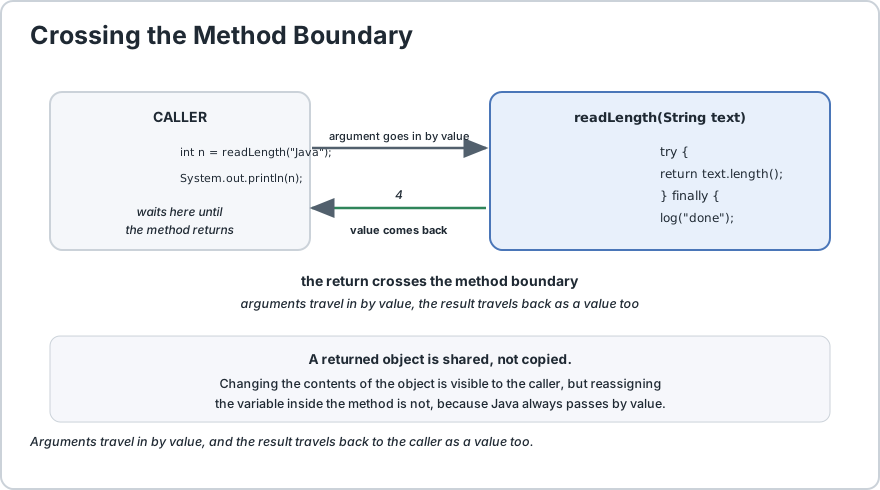
The return crosses the method boundary and hands its value to the caller.
Every branch here returns, so not a single break is required. Adding break after these returns would be dead code, and the compiler would actually flag it as unreachable.
7) What a Caller Receives
A returned object arrives as a reference. Because Java is always pass by value, what you receive is a copy of the reference, not the object itself. The object is shared, so mutating it is visible to the caller, but reassigning the variable inside the method is not.
public static List<String> getDefaults() {
    List<String> list = new ArrayList<>();
    list.add("standard");
    list.add("fast");
    return list;
    // the caller shares this same list
}public static void swapFirst(List input) {
    if (input == null || input.isEmpty()) {
        return;
    } input.set(0, "changed");
    // visible to the caller
    input = new ArrayList();
    // NOT visible, only the local copy
}
Returning a mutable collection therefore hands out a handle to your own data. If the caller should not change it, return an unmodifiable view, for example List.copyOf(list), or return a copy.
8) Common Mistakes
Mistake
Symptom
Fix
Return in a finally block
Wrong value, or an exception that silently disappears.
Move the return to the try or catch block.
Reassigning a parameter and returning it
Caller sees the original, not the change.
Mutate the object, or build and return a new one.
Returning a mutable internal field
Callers can silently corrupt your state.
Return List.copyOf or another unmodifiable copy.
Early return buried in a nested block
Correct, but the path through the method is hard to see.
Flatten with guard clauses and one return per branch.
Multiple returns confused with break
Loop code that never runs after the first match.
Return ends the method, break only ends the loop.
A void method returning a value
Compile error, caught immediately.
Change the return type or drop the value.
Forgetting the final return after a loop
Compile error unless the loop is provably endless.
Add the return after the loop.
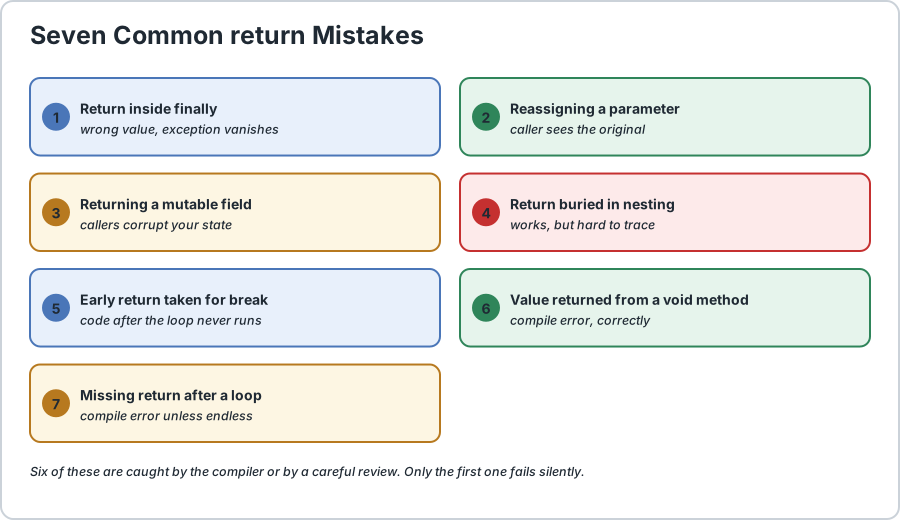
Seven return mistakes. Only the first one is dangerous, and the compiler cannot catch it.
Frequently Asked Questions
What does the return statement do in Java?
It ends the current method immediately and hands control back to the caller. If the method has a return type, the value after return is passed back as the result of the call. Any statement after the return in that method is never executed.
Can a void method use return?
Yes. A void method may use a bare return with no value to exit early, which is a tidy way to write a guard clause. It must never carry a value, because there is no declared type to send it to.
Does every path in a method have to return?
In a method with a return type, yes. Every path must end in a return or a throw, and the compiler checks this exhaustively. In a void method no return is required at the end.
What happens if both try and finally contain a return?
The return in the finally block wins. It discards the value the try block was about to return, and it also swallows any exception that was in flight. The code compiles and runs, so this failure is easy to miss in review.
Can I use return inside a loop instead of break?
Yes, and it is usually clearer. Because return leaves the method entirely, a single statement replaces a break followed by a return. The distinction is that break only leaves the loop, while return leaves everything.
Does returning an object mean the caller gets a copy?
No. Java passes by value, but for an object that value is a copy of the reference. Both sides point at the same object, so changes to its contents are shared, while reassigning a variable inside the method is not visible outside.
Why does the compiler complain about a missing return after a loop?
Because the compiler cannot assume the loop always runs. If the loop body never executes, control falls off the end of the method with no value, so a return after the loop is required. The exception is a while loop with the literal condition true, which the compiler can prove never ends.
Should I use several early returns or a single return at the end?
Either is valid, but early returns usually read better because each branch ends as soon as it has an answer and the remaining logic stays unindented. Pick a style and apply it consistently within a codebase, since mixing both in one method is the thing that genuinely hurts readability.
// Demonstrates the Java return statement.
public class ReturnDemo {
    // The typed method. The compiler requires every path to return.
    public static int clamp(int value, int low, int high) {
        if (value < low) {
            return low;
        } if (value > high) {
            return high;
        } return value;
    } // A void method may still exit early with a bare return.
    public static void logHeader(String name) {
        if (name == null || name.isEmpty()) {
            return;
            // exit early, send nothing back
        } System.out.println("User: " + name);
        System.out.println("Session started");
    } // Return leaves the METHOD, so this break can never be reached.
    public static String classify(int number) {
        final int SMALL = 10;
        for (int i = 0;
        i <= SMALL;
        i++) {
            if (i == number) {
                return "matched at " + i;
            }
        } return "no match";
    } // Every branch returns, so no break is needed anywhere.
    public static int describe(String kind) {
        switch (kind) {
            case "A": return 1;
            case "B": return 2;
            default: return -1;
        }
    } // BROKEN ON PURPOSE, and commented out so it would not run.
    // The return inside finally overrides everything before it.
    // public static int readLengthBad(String text) {
    //     try {
    //         return text.length();
    //     } catch (NullPointerException problem) {
    //         return 0;
    //     } finally {
    //         return -1;                 // discards the value AND the exception
    //     }
    // }
    // The correct version: finally cleans up, it never decides.
    public static int readLengthGood(String text) {
        try {
            return text.length();
        } catch (NullPointerException problem) {
            return 0;
        } finally {
            System.out.println("  (readLength finished)");
        }
    } public static void main(String[] args) {
        final int LOW = 0;
        final int HIGH = 100;
        final int SAMPLE = 150;
        // 1) TYPED RETURN
        System.out.println("clamp(150, 0, 100) = " + clamp(SAMPLE, LOW, HIGH));
        System.out.println("clamp(42, 0, 100)  = " + clamp(42, LOW, HIGH));
        System.out.println("clamp(-7, 0, 100)  = " + clamp(-7, LOW, HIGH));
        // 2) EARLY RETURN ENDS THE METHOD
        System.out.println("classify(4)  = " + classify(4));
        System.out.println("classify(99) = " + classify(99));
        // 3) A BARE RETURN IN A void METHOD
        logHeader("Robin");
        logHeader("");
        // returns immediately, prints nothing
        // 4) RETURN FROM EVERY SWITCH BRANCH, NO break ANYWHERE
        System.out.println("describe(A) = " + describe("A"));
        System.out.println("describe(B) = " + describe("B"));
        System.out.println("describe(Z) = " + describe("Z"));
        // 5) finally WITHOUT A RETURN, SO THE VALUE SURVIVES
        System.out.println("readLengthGood(\"Java\")     = " + readLengthGood("Java"));
        System.out.println("readLengthGood(null) = " + readLengthGood(null));
    }
}/*
    ACTUAL OUTPUT:

        clamp(150, 0, 100) = 100
        clamp(42, 0, 100)  = 42
        clamp(-7, 0, 100)  = 0
        classify(4)  = matched at 4
        classify(99) = no match
        User: Robin
        Session started
        describe(A) = 1
        describe(B) = 2
        describe(Z) = -1
          (readLength finished)
        readLengthGood("Java")     = 4
          (readLength finished)
        readLengthGood(null) = 0

    NOTE ON STEP 5: readLengthGood(null) prints the finally line twice, once
    for the successful path and once for the caught exception, and it still
    returns the correct value both times. The commented out readLengthBad
    would have returned -1 in every case and lost the exception entirely.

    THE FIVE THINGS TO REMEMBER
    1) return ends the METHOD, not just the loop. A break inside the same
       loop is unreachable.
    2) A typed method must return on every path, or throw. The compiler
       proves this, so you never get a silent default value.
    3) A void method may use a bare return to exit early, but must never
       carry a value.
    4) NEVER put a return inside a finally block. It overrides the pending
       return and silently discards the exception. This one is not caught
       by the compiler, so it is on you to avoid.
    5) Early returns usually read better than one big nested block, as
       long as you keep the style consistent.
*/
Common Java Technical Interview Questions & Answers
Interview Prep
Q1: What does the return statement do in Java?\nA1: It ends the current method immediately and hands control back to the caller. If the method declares a return type, the value after return is passed back as the result of the call, and any statement after the return in that method never executes.\nQ2: Can a void method use a return statement?\nA2: Yes. A void method may use a bare return with no value to exit early, which is a clean way to write a guard clause. It must never carry a value, since there is no declared return type to send it to.\nQ3: Does every code path in a method have to return?\nA3: In a method with a declared return type, yes. Every path must end in a return or a throw, and the compiler checks this exhaustively at compile time. A void method does not need a return at the end.\nQ4: What happens if both a try block and a finally block contain a return statement?\nA4: The return in the finally block wins. It discards the value the try block was about to return, and it also swallows any exception that was in flight. The code compiles and runs, so this failure is easy to miss during review.\nQ5: Can I use return inside a loop instead of break?\nA5: Yes, and it is usually clearer. Because return leaves the method entirely, one statement often replaces a break followed by a return. The key distinction is that break only leaves the loop while return leaves everything.\nQ6: Does returning an object give the caller a copy?\nA6: No. Java passes by value, but for an object that value is a copy of the reference. Both sides point at the same object, so changes to its contents are shared, while reassigning a variable inside the method is not visible to the caller.\nQ7: Why does the compiler complain about a missing return after a loop?\nA7: Because the compiler cannot assume the loop always executes. If it never runs, control falls off the end of the method with no value, so a return after the loop is required. The one exception is a while loop with the literal condition true, which the compiler can prove never terminates.\nQ8: Should I use several early returns or a single return at the end?\nA8: Both are valid. Early returns generally read better because each branch ends as soon as it has an answer and the remaining logic stays unindented. The important thing is consistency, since mixing the two styles within one method is what actually hurts readability.
Key Takeaways, Best Practices & Clean Code Rules
Java Best Practice & Production Rules
Never place a return statement inside a finally block, since it discards the value the try block was about to return and silently swallows any in-flight exception, and the compiler will not warn you.\nKeep finally blocks for cleanup only, meaning logging, closing resources, or undoing state changes, and never for anything that decides the outcome of the method.\nUse early returns as guard clauses so each branch ends as soon as it has an answer, which keeps the remaining logic flat and unindented.\nBe consistent about one return style within a method and across a codebase, because mixing several early returns with one large nested block is what makes control flow hard to follow.\nIn a void method use a bare return to exit early, and never attach a value to it, since there is no declared return type to receive it.\nReturn an unmodifiable copy of a mutable collection such as List.copyOf rather than your internal field, so callers cannot corrupt your state.\nRemember that returning an object shares it with the caller, so mutating contents is visible to them even though reassigning the variable is not.\nPrefer returning a value from a small method over mutating a field for the caller to read back, since it keeps the contract explicit and lets the compiler verify every path.\nAvoid a single return variable that is assigned in several branches and returned at the bottom, because it hides the control flow and makes the exit point harder to locate.\nPlace a return after a loop when the loop might not run, since the compiler cannot prove the loop always executes and will reject the method otherwise.\nDo not add break after a return inside a switch case, since the break is unreachable code and the compiler will flag it.
Share with friends, students, or your developer network
We value your privacy & transparency
OperateTools uses cookies and local storage to ensure basic tool functionality, preserve preferences, and analyze aggregated traffic. We never sell your personal data or index your document files. Learn more in our Privacy Policy.
Stay Updated
Enable Notifications?
Get real-time updates, instant tool alerts & daily news directly on your device.