Here is a full program using a ladder for a real decision, with a final else as the catch-all.
// Grading with a correct, strict-to-lenient ladder.
final int TOP_MARK = 90;
final int HIGH_MARK = 80;
final int MID_MARK = 70;
final int LOW_MARK = 60;
int marks = 85;
String grade;
boolean attended = true;
if (!attended) {
    grade = "Absent";
} else if (marks >= TOP_MARK) {
    grade = "A";
} else if (marks >= HIGH_MARK) {
    grade = "B";
} else if (marks >= MID_MARK) {
    grade = "C";
} else if (marks >= LOW_MARK) {
    grade = "D";
} else {
    grade = "F";
}
Notice the order. The absence check is first because it overrides absolutely everything, so nothing else should be able to run first. Then the grades go from highest to lowest, and the catch-all else sits at the bottom. If you moved the absence check to the bottom, a student who was absent but scored well would be graded on marks, which is exactly the kind of bug the ordering rule exists to prevent.
Frequently Asked Questions
What happens if two conditions in a ladder are both true?
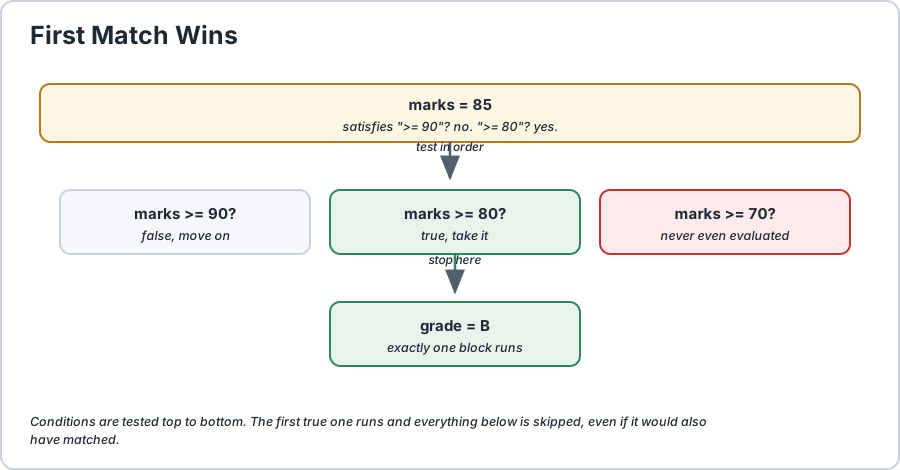
Only the block belonging to the first true condition runs. The later conditions are not evaluated at all, because Java has already left the statement. This is why order matters so much.
Is the final else required?
No, it compiles without one. If it is missing and nothing matches, the whole statement is skipped and the program continues after it. Include it whenever the unmatched case needs specific handling, such as assigning a default value.
Is there any difference between a ladder and nested if statements?
Functionally they are identical, which is why a correct ladder is much easier to read. Nesting means deeply indented blocks, and it also allows several conditions to be tested independently. Use nesting when the second check only makes sense inside the first branch.
Why is my lower branch never reached?
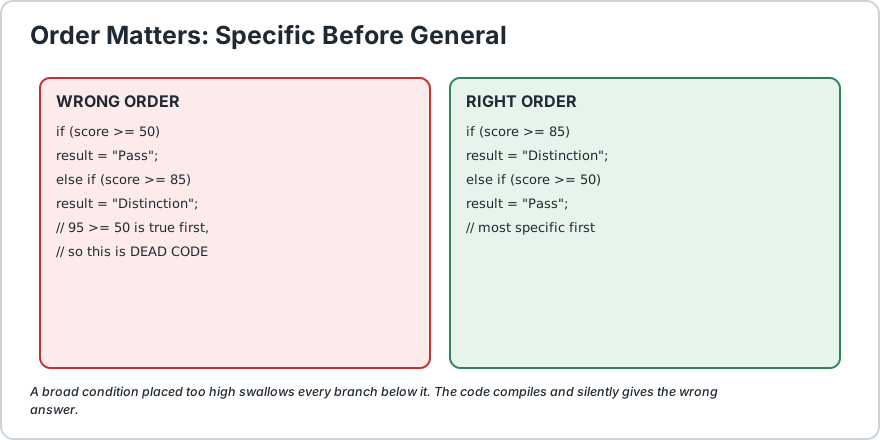
Almost always because an earlier condition is broader and already matched. Reorder the rungs from the most specific to the most general, and the branch will become reachable again.
Do I need curly braces on every rung?
Technically no, but always use them. Without braces the else can attach to the wrong if, and in a long ladder that mistake is extremely hard to see. Two characters per rung is a cheap price for clarity.
How long should a ladder be?
Three or four rungs reads comfortably. Beyond that, a switch statement is usually clearer, because each case is named and visible side by side instead of hidden behind a long chain.
Can a ladder assign a value directly?
No, an if is a statement and cannot be assigned from. If you need a value, use a switch expression or a ternary operator, both of which produce a result you can store in a variable.