Overloading means giving several methods the same name while making them distinguishable by their parameters. add(int, int) and add(double, double) can coexist because the argument types differ, so the compiler knows which one you meant. The value is that callers do not have to remember three different names for what is conceptually one operation. The rule that catches almost everyone is the one thing you cannot vary. Two methods that differ only in return type are a compile error. This is not Java being fussy; it is a direct consequence of how the compiler picks. Java decides which method to call from the arguments alone, because that is all the call site has at that point. If two candidates were identical in parameters but differed in return type, there would be no way to choose, and the code would be ambiguous. Note the contrast with return types themselves, which are entirely free in an overload. Resolution happens at compile time in three passes. An exact match wins outright. Failing that, Java applies widening conversions, which are safe, such as promoting an int to a double. Only if neither works does it try unboxing or boxing. That ordering is why add(1, 2) picks the int version rather than the Integer one, and it is the ordering you need to remember to predict any given call.
Detailed Explanation & Mechanics
1) What Counts as a Different Signature
The compiler identifies a method by its name and its parameter types. Everything else in the declaration is decoration as far as overloading is concerned.
// SAME NAME, DIFFERENT PARAMETER LISTS: all legal overloads
public static int add(int a, int b) {
    ...
}public static double add(double a, double b) {
    ...
}public static int add(int a, int b, int c) {
    ...
}public static int add(int[] values) {
    ...
}
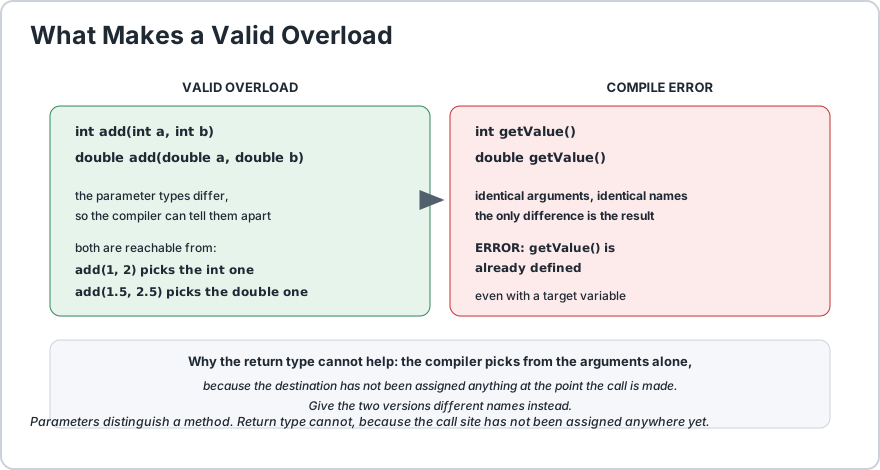
Parameters distinguish an overload. Return type cannot, because the call site has not been assigned anywhere yet.
2) The One Rule That Bites
Return type cannot be the only difference. This fails to compile:
public static int getValue() {
    return 1;
}public static double getValue() {
    return 1.5;
}// COMPILE ERROR: getValue() is already defined
The reason is worth understanding rather than memorising. At the call site, the compiler has only the arguments to work from. If two methods matched every argument equally well, there would be no tie-breaker, and the code would be genuinely ambiguous. Even with a variable involved, it does not help:
double result = getValue();
// still ambiguous, the return type
// is not used to select the method
It is a compile error, not a warning. If you want two versions that differ only by result type, give them different names: getIntValue() and getDoubleValue(), or return a type that holds both.
Difference between the two methods
Valid overload?
Parameter types
Yes, this is overloading
Number of parameters
Yes
Return type only
No, compile error
Parameter names only
No, names are not part of the identity
Access modifier
Allowed to differ, but does not make it a valid overload on its own
static versus instance
No, the two would clash
throws clause
Allowed to differ, but does not make it a valid overload on its own
3) Constructor Overloading
The same rules apply to constructors, and this is where overloading is used most. A class can have as many constructors as it needs as long as their parameter lists differ.
public class Point {
    private final int x;
    private final int y;
    public Point() {
        // origin
        this(ORIGIN, ORIGIN);
    } public Point(int x) {
        // one axis set
        this(x, ORIGIN);
    } public Point(int x, int y) {
        // both axes
        this.x = x;
        this.y = y;
    }
}
Note the this(...) calls. Rather than duplicating the assignment logic, each shorter constructor delegates to the fullest one. That is the pattern to follow: one constructor does the work, the others forward to it, so there is a single place where the fields are set.
4) How the Compiler Chooses
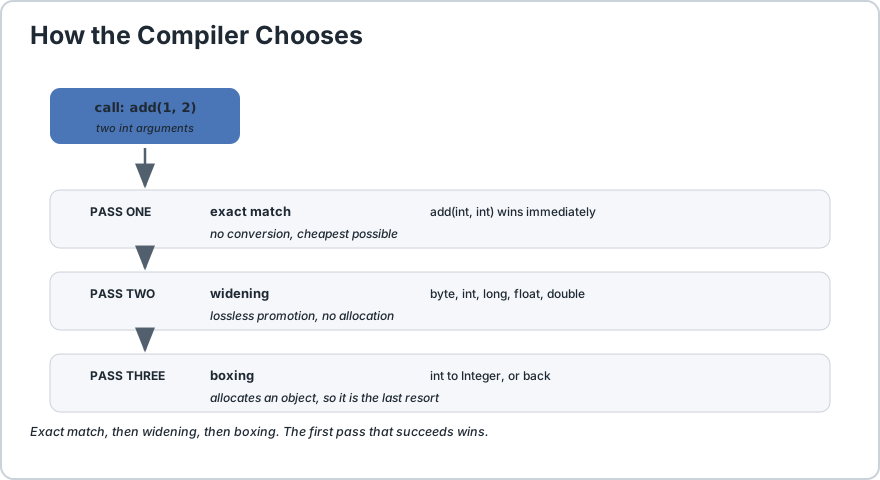
Resolution happens at compile time, in three passes, and the order matters.
Exact match first, then widening, then boxing. The first pass that succeeds wins.
Pass
What it allows
Example
Pass one, exact match
Identical types, no conversion
add(int, int) for two int arguments
Pass two, widening
Safe primitive promotion, in order
byte to int to long to float to double
Pass three, boxing
Primitive to wrapper and back
int to Integer, or an Integer to int
This ordering is not arbitrary. Widening never loses information, so Java prefers it over boxing, which allocates an object. The practical effect is that a call with primitives picks a primitive overload in preference to a wrapper one.
public static String show(int value) {
    return "int";
}public static String show(Integer value) {
    return "Integer";
}show(PRIMITIVE);
// "int", the exact match wins
show(BOXED);
// "Integer", exact match again
Widening only ever goes one way, following the order above. A long will not silently become an int, because that could discard digits. If you need that, the conversion must be explicit.
5) Ambiguity, and What Triggers It
Ambiguity happens when no single method is more specific than the others. The compiler refuses rather than guessing, which is one of the safer corners of the language.
public static int add(int a, long b) {
    ...
}public static int add(long a, int b) {
    ...
}add(ONE, TWO);
// COMPILE ERROR: both match equally well
The classic triggers are worth memorising because they all produce the same confusing error.
Situation
Why it fails
Widening versus boxing
Neither is a subtype of the other, so neither wins
Two reference types with no inheritance link
Neither is more specific
null passed to two unrelated types
null matches every reference type
An argument needing a narrowing conversion
No overload accepts it
int versus long versus Integer together
Widening and boxing compete with no clear winner
The fix is usually to cast at the call site so the intent is explicit, or to remove one of the competing overloads. Adding a third overload to a two-way ambiguity rarely helps.
6) Overloading varargs
Because Type... name is really Type[] name, a varargs method and an array method cannot coexist. They are the same signature.
public static int sum(int... values) {
    ...
}// public static int sum(int[] values) { ... }
// COMPILE ERROR: these are the same signature
sum(ONE);
// zero or more ints, wrapped into an array
sum(ONE, TWO, THREE);
What you can do is pair varargs with a fixed-arity version. The fixed one is preferred for the exact argument count, and the varargs one takes everything else.
public static String join(String a, String b) {
    return a + "-" + b;
    // chosen for exactly two
}public static String join(String... parts) {
    return String.join("-", parts);
    // chosen for any other count
}
Be aware that a no-argument call is ambiguous between join() and the varargs version if you also define a zero-argument join(), so avoid that shape.
7) When Overloading Helps, and When It Hurts
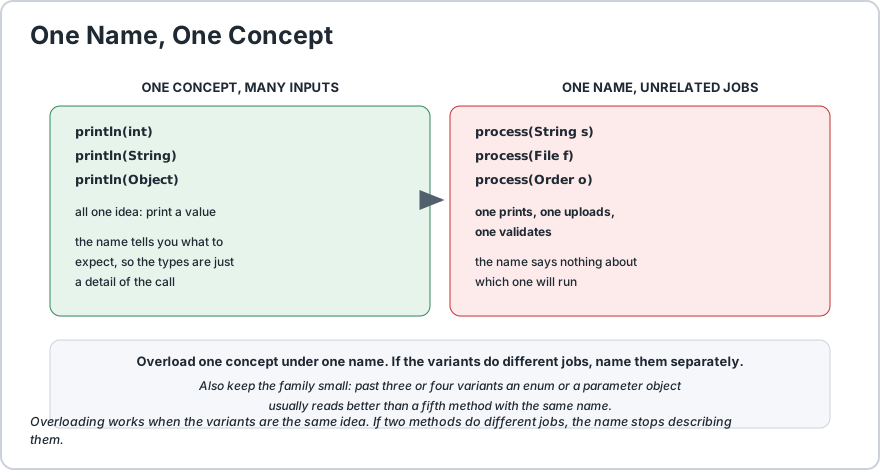
Overloading earns its place in two situations. The first is the same concept, different input types, like println accepting anything printable. The second is optional arguments without the complexity, where a shorter overload forwards to the fuller one.
It becomes a liability when the overloads are not conceptually related. Two methods sharing a name but doing different jobs means a reader has to check the parameter types to know which is which, and the name stops carrying information.
Overload one concept under one name. If the two methods do different jobs, give them different names.
Two habits keep it readable. First, make the shortest overload delegate to the longest, so the logic exists once. Second, keep the count modest; more than three or four variants of one name becomes hard to hold in mind, and a small enum or a parameter object often reads better.
8) Common Mistakes
Mistake
Symptom
Fix
Differing only by return type
Compile error, already defined
Change the parameters or rename the method.
Differing only by parameter names
Compile error, already defined
Names are not part of a signature.
varargs plus an array version
Compile error, same signature
Keep just the varargs form.
Passing null to unrelated types
Ambiguous method call
Cast to the type you mean.
Two equally specific candidates
Ambiguous method call
Cast at the call site, or drop one.
Assuming a wrapper overload is chosen
The primitive version runs instead
Exact and widening passes come first.
Copy-pasted body in every overload
Bug fixed in one copy only
Have the short ones delegate to the long one.
Overloading unrelated operations
The name no longer describes the work
Give them separate names.
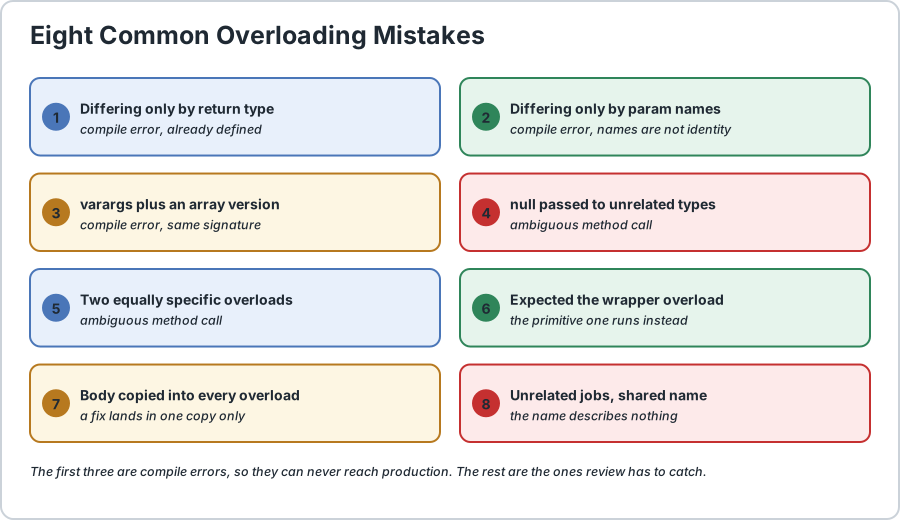
Eight overloading mistakes. The first three are compile errors, so they can never reach production.
Frequently Asked Questions
What is method overloading in Java?
Giving several methods the same name while making them distinguishable by their parameter lists, so the compiler can pick the right one from the argument types. add(int, int) and add(double, double) can coexist, and callers use the same name for what is conceptually one operation.
Can two methods differ only in return type?
No. It is a compile error. The compiler must select a method using the arguments alone, because the return type is not available at the point where the call is made. Two candidates that matched every argument equally would be genuinely ambiguous.
How does the compiler choose between overloads?
In three passes at compile time. An exact match wins first. Failing that, Java tries widening primitive conversions, which are lossless. Only if neither succeeds does it consider boxing or unboxing, since allocating an object is the most expensive option.
What causes an ambiguous method call?
Two or more overloads matching the arguments equally well, with neither being more specific. Common triggers are widening competing with boxing, unrelated reference types with no inheritance link, and passing null to several unrelated types. Casting at the call site resolves it.
Can a varargs method overload an array method?
No. Since Type... is compiled as Type[], the two are the same signature and declaring both is a compile error. You can pair varargs with a fixed-arity version, and the fixed one is preferred when the argument count matches exactly.
Does overloading work across different classes?
Overloading is resolved within a single class. A subclass method with the same name but different parameters is technically a new method rather than an overload, since the compiler picks between them using the reference type, not at runtime. Same-signature methods across a hierarchy must be overrides, which is a separate mechanism.
Is overloading always a good idea?
It is good when the overloads represent one concept with different inputs, such as println accepting anything printable. It hurts when unrelated operations share a name, because a reader must check the parameter types to know which method runs, and the name stops carrying information.
Do parameter names count toward the signature?
No. Two methods differing only in parameter names are a compile error, because callers pass positionally and never mention the names. Only the number of parameters and their types form the identity the compiler uses.
// Demonstrates method overloading rules, resolution, and ambiguity.
public class OverloadingDemo {
    private static final int ORIGIN = 0;
    private static final int TEN = 10;
    private static final int TWENTY = 20;
    private static final int THIRTY = 30;
    private static final int ONE = 1;
    private static final int TWO = 2;
    private static final int THREE = 3;
    private static final double TEN_POINT_FIVE = 10.5;
    private static final double TWENTY_POINT_FIVE = 20.5;
    private static final Integer BOXED_TEN = Integer.valueOf(TEN);
    // 1) SAME NAME, DIFFERENT PARAMETER LISTS
    public static int add(int a, int b) {
        return a + b;
    } public static double add(double a, double b) {
        return a + b;
    } public static int add(int a, int b, int c) {
        return a + b + c;
    } public static int add(int[] values) {
        int total = 0;
        for (int value : values) {
            total = total + value;
        } return total;
    } // 2) SHOWS WHICH OVERLOAD WON
    public static String show(int value) {
        return "int";
    } public static String show(Integer value) {
        return "Integer";
    } // 3) THE SHORT OVERLOAD DELEGATES TO THE LONG ONE
    public static String join(String a, String b) {
        return a + "-" + b;
    } public static String join(String... parts) {
        return String.join("-", parts);
    } // 4) CONSTRUCTOR OVERLOADING, EACH ONE DELEGATING
    Point() {
        this(ORIGIN, ORIGIN);
    } Point(int x) {
        this(x, ORIGIN);
    } Point(int x, int y) {
        System.out.println("  Point(" + x + ", " + y + ")");
    } public static void main(String[] args) {
        // 1) THE COMPILER PICKS FROM THE ARGUMENT TYPES
        System.out.println("add(10, 20)          = " + add(TEN, TWENTY));
        System.out.println("add(10.5, 20.5)      = " + add(TEN_POINT_FIVE, TWENTY_POINT_FIVE));
        System.out.println("add(10, 20, 30)      = " + add(TEN, TWENTY, THIRTY));
        System.out.println("add(new int[]{1,2,3}) = " + add(new int[] {
            ONE, TWO, THREE
        }));
        // 2) EXACT MATCH WINS OVER THE WRAPPER VERSION
        System.out.println("show(10)             = " + show(TEN));
        System.out.println("show(Integer.valueOf(10)) = " + show(BOXED_TEN));
        // 3) FIXED ARITY IS PREFERRED FOR THE EXACT COUNT
        System.out.println("join(\"a\", \"b\")       = " + join("a", "b"));
        System.out.println("join(\"a\", \"b\", \"c\")  = " + join("a", "b", "c"));
        // 4) CONSTRUCTOR OVERLOADING
        System.out.println("constructors:");
        new Point();
        new Point(TEN);
        new Point(TEN, TWENTY);
        // THE TWO BELOW DO NOT COMPILE, AND ARE SHOWN AS COMMENTS
        //
        // 5) DIFFERING ONLY BY RETURN TYPE: compile error
        // public static int getValue() { return 1; }
        // public static double getValue() { return 1.5; }
        //
        // 6) VARARGS PLUS AN ARRAY VERSION: compile error, same signature
        // public static int sum(int... values) { return 0; }
        // public static int sum(int[] values) { return 0; }
        //
        // 7) TWO EQUALLY SPECIFIC CANDIDATES: ambiguous method call
        // public static int widen(int a, long b) { return 0; }
        // public static int widen(long a, int b) { return 0; }
        // widen(1, 2);   // both match, neither wins
    }
}/*
    ACTUAL OUTPUT:

        add(10, 20)          = 30
        add(10.5, 20.5)      = 31.0
        add(10, 20, 30)      = 60
        add(new int[]{1,2,3}) = 6
        show(10)             = int
        show(Integer.valueOf(10)) = Integer
        join("a", "b")       = a-b
        join("a", "b", "c")  = a-b-c
        constructors:
          Point(0, 0)
          Point(10, 0)
          Point(10, 20)

    THE SIX THINGS TO REMEMBER
    1) A SIGNATURE IS THE NAME PLUS THE PARAMETER TYPES. Nothing else
       counts, so return type, parameter names, access modifiers, and
       throws clauses can never make a valid overload.
    2) YOU CANNOT OVERLOAD ON RETURN TYPE. The compiler chooses using
       the arguments alone, so two candidates would be ambiguous.
    3) RESOLUTION RUNS IN THREE PASSES: exact match, then widening,
       then boxing. Widening is lossless, so it beats boxing, which
       has to allocate an object.
    4) WIDENING ONLY GOES ONE WAY, following byte, short, int, long,
       float, double. Narrowing needs an explicit cast.
    5) VARARGS IS AN ARRAY, SO IT CANNOT OVERLOAD AN ARRAY VERSION.
    6) HAVE THE SHORT OVERLOAD DELEGATE TO THE LONG ONE with this(...)
       in a constructor or a plain call in a method, so the logic is
       written once and fixed once.
*/
Common Java Technical Interview Questions & Answers
Interview Prep
Q1: What is method overloading in Java?\nA1: Giving several methods the same name while making them distinguishable by their parameter lists, so the compiler selects the correct one from the argument types. add(int, int) and add(double, double) can coexist, letting callers use the same name for what is conceptually one operation.\nQ2: Can two methods differ only in their return type?\nA2: No, it is a compile error. The compiler must select a method using the arguments alone, since the return type is not available at the point the call is made. Two candidates matching every argument equally well would be genuinely ambiguous.\nQ3: How does the compiler choose between overloaded methods?\nA3: In three passes at compile time. An exact match wins first. Failing that, Java tries widening primitive conversions, which are lossless. Only if neither succeeds does it consider boxing or unboxing, since allocating a wrapper object is the most expensive option.\nQ4: What causes an ambiguous method call?\nA4: Two or more overloads matching the arguments equally well, with neither more specific than the others. Common triggers are widening competing with boxing, unrelated reference types with no inheritance relationship, and passing null to several unrelated types. An explicit cast at the call site resolves it.\nQ5: Can a varargs method overload an array method?\nA5: No. Since Type... is compiled as Type[], the two declarations have the same signature and declaring both is a compile error. You can pair varargs with a fixed-arity version, and the fixed one is preferred when the argument count matches exactly.\nQ6: Do parameter names count toward a method signature?\nA6: No. Two methods differing only in their parameter names are a compile error, because callers pass arguments positionally and never mention the names. Only the number of parameters and their types form the identity the compiler uses for selection.\nQ7: Does overloading work the same way across a class hierarchy?\nA7: No. Overloading is resolved within a single class. A subclass method with the same name but different parameters is a new method rather than an overload, since selection happens against the reference type at compile time. A same-signature method across a hierarchy must be an override, which is a separate mechanism using runtime dispatch.\nQ8: When is overloading a bad idea?\nA8: When the overloads do not represent one concept. If unrelated operations share a name, a reader must inspect the parameter types to know which method runs, and the name stops carrying information. Overloading works best for a single concept expressed over different input types, or for optional arguments.
Key Takeaways, Best Practices & Clean Code Rules
Java Best Practice & Production Rules
Vary the parameter list when overloading, since return type, parameter names, access modifiers, and throws clauses cannot make a valid signature difference.\nHave each shorter overload delegate to the fullest one, so the logic is written once and a bug fix cannot be applied to only one copy.\nKeep the overload family conceptually unified, and give unrelated operations separate names so each one still describes what it does.\nPlace a varargs overload last, since it matches any remaining argument count and would otherwise capture calls intended for a fixed-arity version.\nAvoid pairing varargs with an explicit array overload, since Type... already compiles to Type[] and the two clash.\nResolve ambiguity with an explicit cast at the call site rather than by adding a third overload, since a further overload rarely removes a two-way tie.\nRemember that exact match beats widening and widening beats boxing, so a call with primitives will not select a wrapper overload.\nPrefer an enum or a parameter object over a long family of overloads once a method needs more than three or four variants of one name.\nGive constructor overloads a delegation chain ending in the fullest constructor, using this(...) so the fields are assigned in exactly one place.\nDocument which overload each call site resolves to when the behaviour differs meaningfully, since the choice is invisible at the call.\nDo not rely on overloading to change only a return type, and instead use distinct names such as getIntValue() and getDoubleValue().\nKeep the primitive and wrapper overloads in mind when reading code, because a silently selected variant is a common source of confusion.
Share with friends, students, or your developer network
We value your privacy & transparency
OperateTools uses cookies and local storage to ensure basic tool functionality, preserve preferences, and analyze aggregated traffic. We never sell your personal data or index your document files. Learn more in our Privacy Policy.
Stay Updated
Enable Notifications?
Get real-time updates, instant tool alerts & daily news directly on your device.